How to Choose Between Classification and Unsupervised Segmentation
Both the Classification and Unsupervised Segmentation modules can classify input images, but they differ in functionality and case. You should choose the appropriate module based on your specific needs and context. The following table outlines key comparison dimensions to help guide your decision.
Functionalities
The Classification module identifies image classes based on your labels and outputs the corresponding class for each image. The Unsupervised Segmentation module, on the other hand, classifies input images into OK, NG, and Unknown classes, and provides an approximate defect area for NG images.
If you need to classify images into custom classes, use the Classification module. If you want to detect NG images and highlight approximate defect locations without distinguishing between defect classes, use the Unsupervised Segmentation module.
Characteristics of Input Image Data
If the target classes are limited and fixed—such as the front and back sides of the same product or multiple known types of objects—you can use the Classification module. You need to label all known classes to train the model.
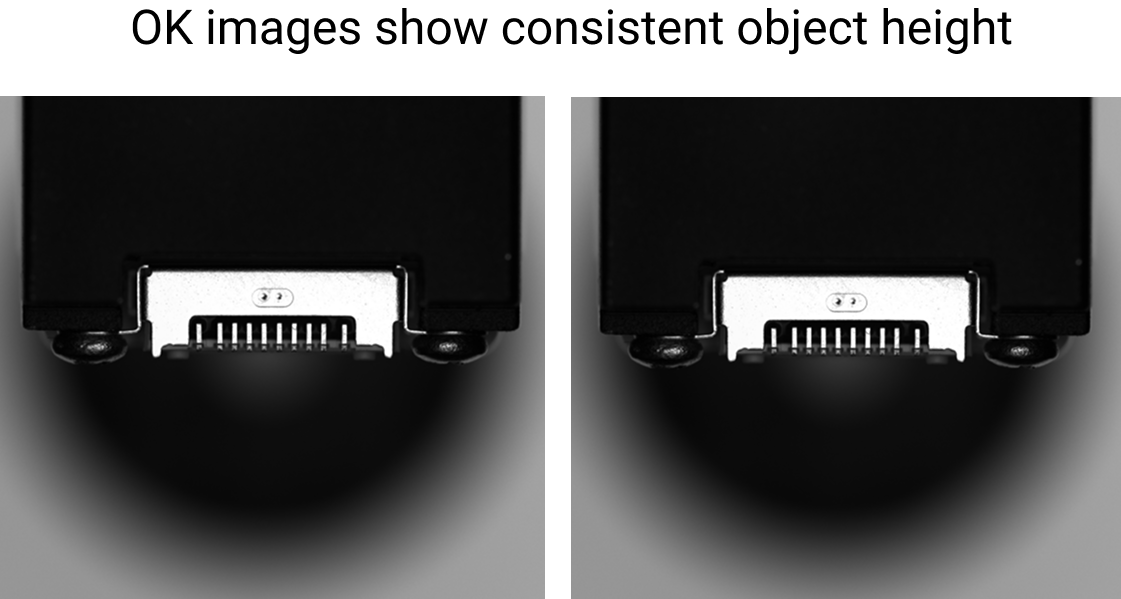
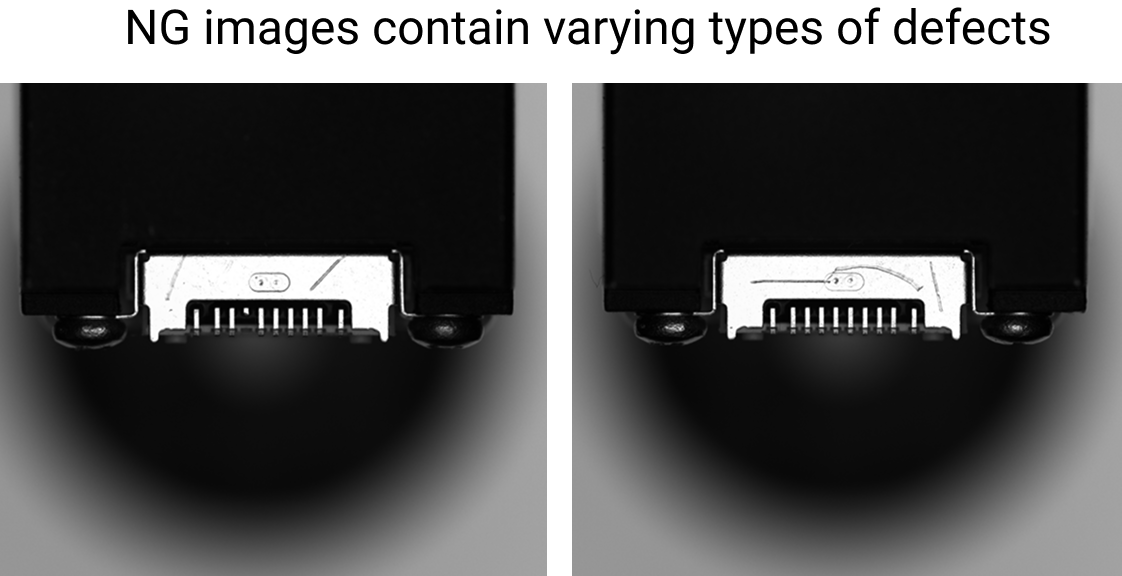
If OK images are highly consistent and defects vary widely in shape, location, and other characteristics, the Unsupervised Segmentation module is a suitable choice. You don’t need to add labels for defects or classes. You can just provide a small number of OK images to train the model.
Common Cases
-
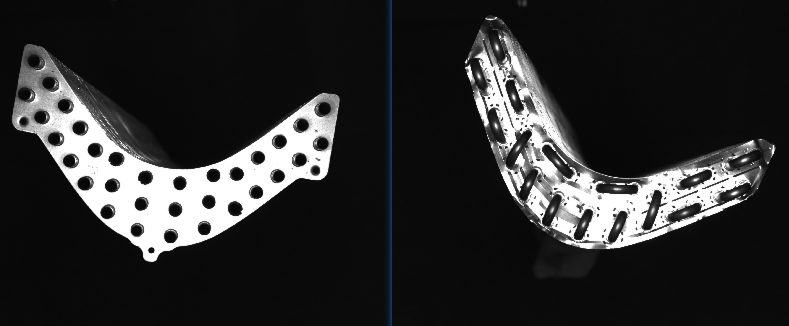
Example 1: To distinguish between the front and back sides of a condenser and output the class label, you can use the Classification module.
-
Example 2: When distinguishing between OK and NG images of network ports, where OK images are consistent but defects are diverse, the Unsupervised Segmentation module is a suitable choice.